
Explosive Ordnance Risk Education:
The ATC employs a comprehensive technical approach to mine and explosive ordnance (EO) risk education, focusing on three key elements:
• Community Mine Action Liaison
• Education and Training
• Public Information Dissemination
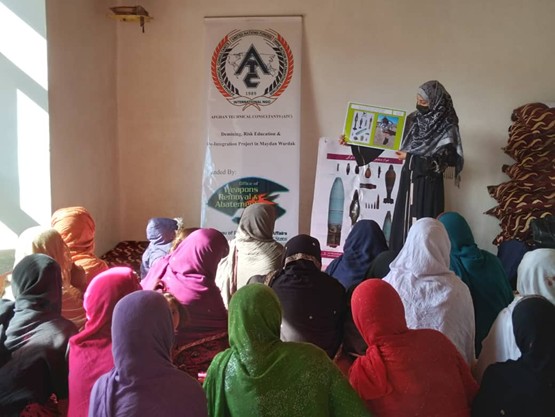
ATC actively delivers risk education (RE) to target communities, aiming to promote safe behaviors and reduce civilian casualties. The EORE teams effectively distribute RE materials to enhance the impact of their educational sessions. Furthermore, ATC trains both male and female Community Volunteers in risk education. These volunteers, selected from the target communities, remain in the area to continue providing EORE even after the project’s conclusion. This ongoing effort particularly emphasizes reaching girls and women, aligning with the gender mainstreaming goals of the mine action program while also fostering safe behaviors within the community.
Non-Technical Survey:
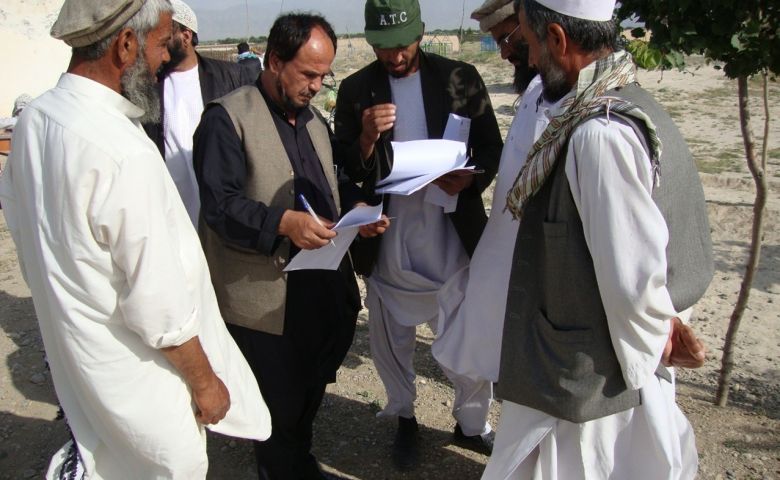
ATC technical approach to implement the Non-Technical Survey (NTS) as the foundation to clarify the problem that where mine/ERW contamination is present and people are in threat of mines/ERW, for saving resources; allowing the safe and efficient return of land, prioritization and decision-making processes through the provision of evidence.
Planning is done to analyze and map the available information to better guide and support the ATC Teams, according to plan initial meetings are arranged to identify access key informants such as local actors, land users and former combatants. Greater focus would be on survivals of mine/ERW incidents, people working in scrap metal collection and other high-risk and marginalized groups and affected communities, so key evidence is not missed through the survey process.
Technical Survey:
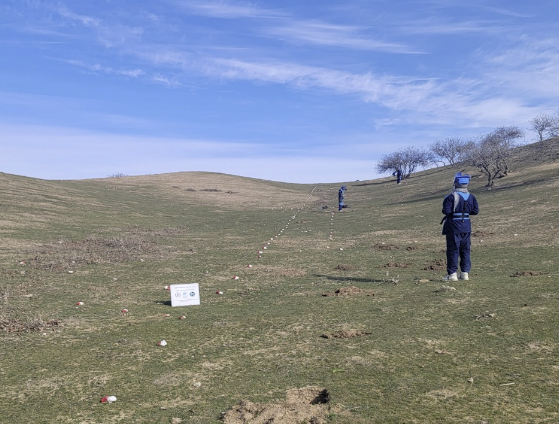
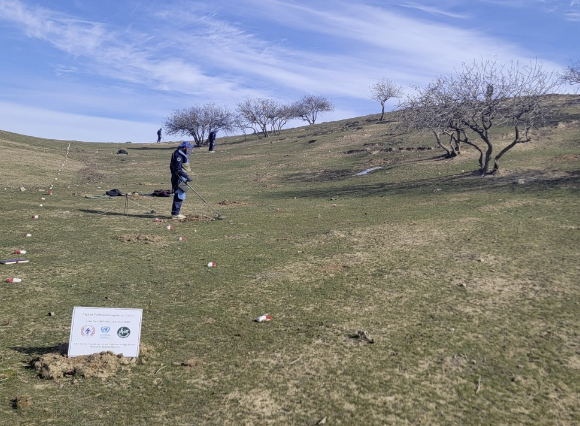
Technical Survey (TS) is the physical intervention that collects information particularly about the type and distribution of the contamination. TS will be done by the teams’ command group after the completion of the NTS and before EOD/demining operations is started in full capacity. Qualified and technical staff will be involved in the TS process to investigate specific areas around previously mine accident points. TS procedures and methods are fully explained in ATC related SOP which will be considered thoroughly during the project execution.
The first step in technical survey is to analyze existing information about the contaminated area. In particular, it uses the data from the non-technical survey report.
Second step is to draft a plan and choose the appropriate and the best clearance method according to the situation of the problem from the three common survey methods that are:
o Targeted Investigation
o Systematic Investigation
o Full Coverage.
The entire process is supported by well-defined, well documented information and quality management systems.
The Planning, Implementing and reporting stages of ATC Technical Survey are consistently monitored, giving stakeholders enough confidence in the procedures leading up to clearance operations. The efficiency and effectiveness of ATC technical survey identify and define areas containing landmine and ERW contamination in better ways. The main objective of ATC Technical Survey is to identify the actual hazard area which need clearance efforts, facilitating faster, safer and cheaper achievements of all goals.
All the information of new evidences is recorded, well documented and will be considered by ATC Teams.
ATC will not commence demining operation on the field unless the result of NTS/TS is confirmed.
Manual Mine Clearance:
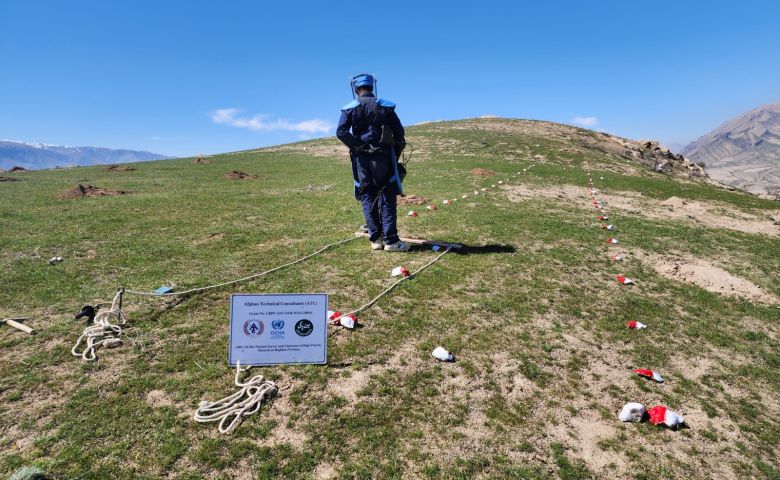
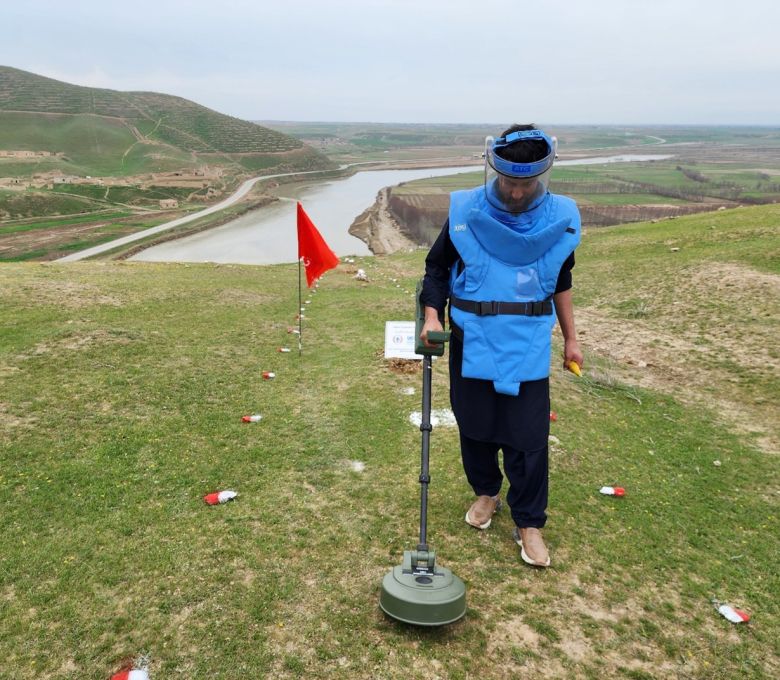
ATC commenced its manual mine clearance operations on January 6, 1990, with the establishment of its first mine clearance team in Kunar Province, Afghanistan. Since then, ATC has successfully cleared the majority of high-priority mined areas across 32 provinces throughout the country.
Manual mine clearance remains the cornerstone of ATC’s activities and the broader mine action program. No alternative method has proven capable of providing the same level of assurance in clearing contaminated land, ensuring the safety and well-being of affected communities.
Battle Area Clearance (BAC)
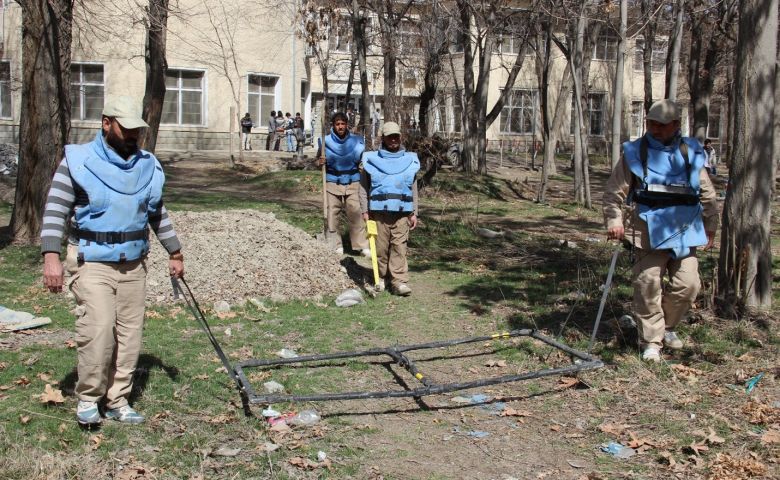
With intense fighting in Kabul and the evacuation of Kabulis to Jalalabad, ATC used its demining teams for battle area clearance in areas surrounding the internally displaced persons camp in Jalalabad in early 1994 and later returned once again for clearance operations in Kabul. ATC established a specific Battle Area Clearance (BAC) project in Kabul City in late 1995 to assist clearing the large amount of UXOs, which caused frequent accidents.
New BAC techniques that were developed and introduced to the program have been continued. ATC BAC teams specifically worked in Kabul till mid 1999. Now, all demining teams have completed cross training in BAC and are capable in dealing with UXO types up to 150 mm while not affecting the demining operations.
Explosive Ordnance Disposal (EOD)
In 1993, ATC contracted a British Bomb Disposal specialist to help clear bombs and rockets scattered all over Kabul City. A team of three men were able to work in Kabul City despite continued armed conflict in some areas. Soon after this project completed, ATC created new EOD teams. These teams have been busy cleaning ERW in many provinces across Afghanistan.
Render safe and destruction of aerial bombs, guided missiles and large unexploded ordnance is termed Explosive Ordnance Disposal (EOD). EOD teams use specialized tools such as bomb locater, de-armor, rocket wrench, ballistic-disk, Charge Linear Cutting (CLC) and plastic explosives to deal with ERW. EOD teams also protect surrounding buildings and facilities with protective works such as sandbagging the danger area and establishing safety distances.
Survey and Clearing Improvised Mines:
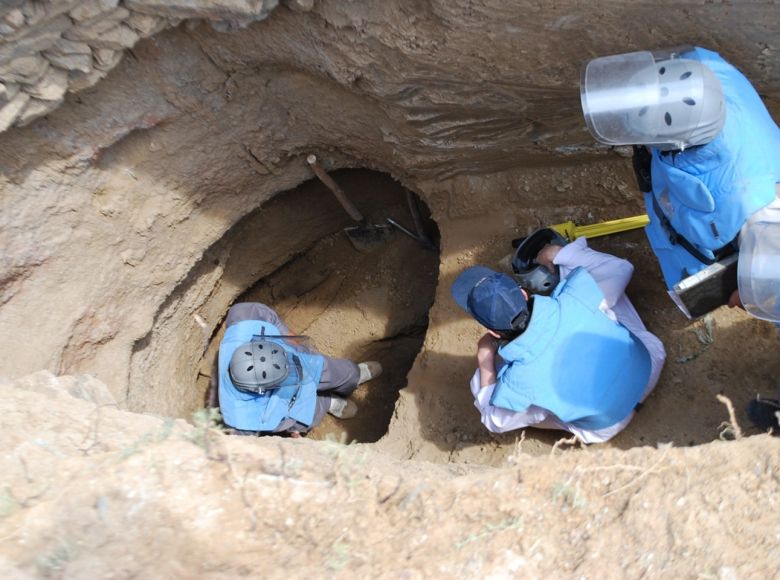
A device placed or fabricated in an improvised manner incorporating destructive, lethal, noxious, pyrotechnic or incendiary chemicals and designed to destroy, incapacitate, harass or distract. It may incorporate military stores, but is normally devised from non-military components. Refers to a type of IED incident that involves complete functioning devices. [UNMAS IED Lexicon]
ATC always maintains its humanitarian principals that are: Humanity, Impartiality, Neutrality and Independence. These principals can never be breached or compromised. Therefore, ATC never deals with active and live IEDs when they are ‘owned’ by any armed group.
ATC addresses ONLY Abandoned Improvised Mines (AIMs) and objects that are not in use anymore. Clearance of these abandoned devices shall be requested by all stakeholders at the community level.
ATC raised IM clearance teams by conducting survey, basic, intermediate, advanced and Training of Trainers’ courses by its own instructors. Also, ATC modified its current demining machines enabling them to work on IM contaminated areas. These mechanical assets have been accredited by the program and proved to very effective and efficient in addressing areas contaminated by improvised devices.
Mechanical Mine Clearance Composition and Activity
- On 1st September 1990, ATC deployed two Mechanical Flail machines in the Urgoon district of Paktika province and continued to work in different parts of the country until early 1996. It was the first mechanical demining team in the country.
2. A Mechanical Excavation Team (MET) using Backhoe Machine started operation on 20 May 1997 in residential areas of Kabul City. This involved excavating soil from residential areas and canals in minefields, which was a high-risk activity for manual deminers. This method of demining has proved to be very effective to speed up the operations and reduce demining casualties at build-up areas.
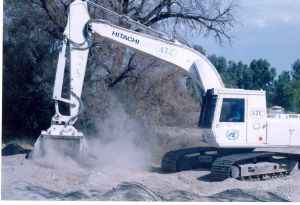
3. In July 2000, a newly-developed machine contributed by the Japanese government was added to ATC mechanical capacity. The operation of this machine adds additional capability to the existing techniques of field clearance. Besides excavation, this machine is equipped with rotary cutter and chain which can be used easily in bushes and harder mine fields. The second and third versions of this machine, with some modifications, was also contributed to the organization. The Hitachi machines consist of a long reach mechanical excavator with the bucket replaced by a rotary cutting device. The rotary cutting device consists of a steel drum with hardened steel teeth, designed to chew up the ground, and any buried mines the ground to a depth of 300 mm (further passes over the same piece of ground can increase the clearance depth to 600 mm, 900 mm or 1.2 meters if required).
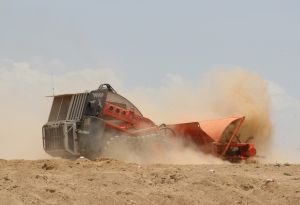
4. A Bozena4 intrusive demining machine was added to ATC mechanical assets in 2007. This machine was provided by the US Department of State fund to ATC and deployed on high priority minefields.
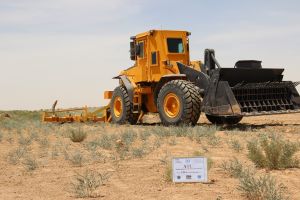 5. A Volvo machine with side ripper attachment was added to ATC fleet to work on anti-vehicle minefields in 2012. The machine was provided by the International Road Transport Union (IRU).
Mine Detection Dogs:
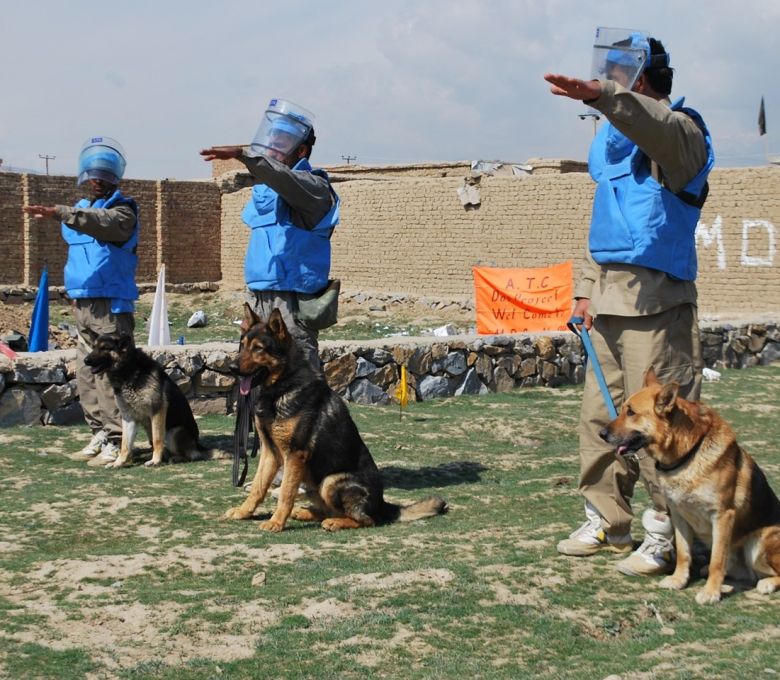
The US Department of State initiated MDD mine clearance program with ATC on 1st April 2007. At the beginning, seven new dogs were purchased and put on training under the supervision of highly qualified personnel from ATC and WRA.
All the dogs were adequately trained and accredited by UNMACA. The training process has been done in Jalalabad city of Nangarhar Province, ATC training camp at Kabul and in the area designed for accreditation process in Chahar Asyab district of Kabul province.
ATC had deployed 4 Mine Dog Sets (12 Mine Detection Dogs) before the Mine Action Program of Afghanistan decided to pull out the MDDs from the demining operations.
Currently, ATC does not use the MDDs in its clearing operations but the organization has the experience and capacity to deploy them whenever it is convenient and approved the quality management of the mine action program.